

High-precision mass flow controllers enable precise gas control in gas-shielded welding processes.

Introduction
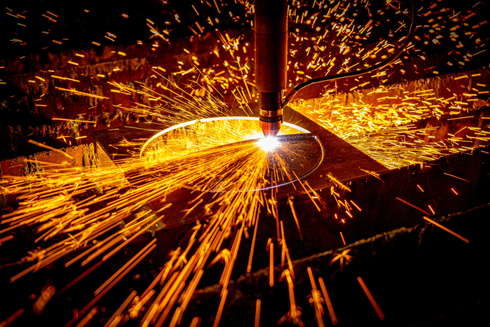
Gas-shielded welding is one of the most widely used processes in modern metal joining. Shielding gases may be single-component gases (such as argon or carbon dioxide) or binary mixtures (such as argon–oxygen, argon–carbon dioxide, argon–helium, or argon–hydrogen) or ternary mixtures (such as helium–argon–carbon dioxide). During welding, reactive shielding gases like CO₂ not only isolate the weld from air and harmful contaminants but also, to some extent, influence the chemical composition of the molten pool and help regulate weldability and penetration. Stable gas flow rate directly affects weld quality and gas consumption: excessive flow can induce turbulent flow, entraining atmospheric contaminants into the weld; insufficient flow provides inadequate protection, leading to porosity and burn-off of alloying elements. Therefore, direct and precise monitoring and control of the mass flow rate of welding shielding gases are critical steps for ensuring consistent weld quality and reducing gas consumption costs.
Project Introduction
Henan Winner Vibrating Equipment Co., Ltd. has significantly expanded its automated production capacity. Consequently, the welding robots deployed across its facilities impose increasingly stringent requirements on the precision of CO₂ shielding gas control, the consistency of gas supply, and the efficiency of gas consumption management. In operational scenarios involving centralized gas supply systems, high-pressure cylinder-based supply, and coordinated multi-robot workcells, the company confronts the following key challenges:
1. Fluctuations in supply pressure affect flow stability.
Changes in the pressure of centralized gas supply lines and cylinders can affect the actual gas flow rate. Particularly during welding start-up and shut-down phases, such as arc initiation and termination, a lack of precise gas flow control can easily lead to transient deviations in gas supply or unnecessary gas consumption.
2. Lack of effective monitoring of flow rates at multiple welding torches
When multiple robots operate simultaneously, conventional gas-supply systems struggle to effectively monitor the actual gas flow at each welding torch. If a gas supply interruption, leak, or flow anomaly occurs and goes undetected, it can result in batches of defective welds, increasing rework and quality risks.
3. Insufficient linkage between gas consumption data and cost accounting
There is a lack of effective correlation between total CO₂ consumption and the actual gas usage of individual robots and workstations, increasing the difficulty of managing gas consumption cost accounting and investigating abnormal losses.
Based on the aforementioned requirements, the customer seeks a solution that enables direct measurement of gas flow using mass flow control equipment, implements closed-loop control, and supports setting flow upper and lower limits along with over‑limit alarms.
Solution

Leveraging its deep technical expertise in precision fluid measurement and control, Beijing AccuFlow Technology Co., Ltd. (referred to as “ACCU”) In response to customer needs, we have provided a solution based on Customized solutions for the ACU20FD series high-precision gas mass flow controllers.
This solution is based on the direct measurement of gas mass flow rate. By employing real-time flow feedback and closed-loop control, it achieves precise regulation of CO₂ shielding gas. Combined with digital communication and a corresponding automated control system, it meets the requirements of welding production for flow stability, anomaly monitoring, and multi-station gas management.
ACU20FD The gas mass flow rate is measured using the capillary heat‑transfer temperature‑difference calorimetry principle, achieving millisecond‑level response and remaining unaffected by temperature and pressure fluctuations. The product features a short warm-up time, minimal zero-point drift, and high reliability. , It provides a stable and reliable air supply for intelligent manufacturing. The solution also features RS485 digital and 4–20 mA analog input/output interfaces, supporting both remote and local operation modes, thereby offering users exceptional flexibility.
Core advantages of the ACU20FD high-precision gas mass flow controller:
1. High precision and fast response
Based on the thermal principle, it directly measures mass flow and is unaffected by temperature or pressure; its tubular flow divider is resistant to clogging, making it suitable for various low- and high-pressure pipelines; it features short warm-up time, minimal zero drift, and high reliability.
2. Process Improvement
The shielding gas flow rate remains consistent across multiple batches of workpieces at the same workstation, reducing porosity and spatter defects in welds; when multiple shifts and several robots operate simultaneously, process stability improves.
3. Seasonal Cost Reduction
Precise closed-loop control reduces excess air supply and waste of surplus air, typically achieving 20%–35% air savings under suitable operating conditions, with significant long-term cost benefits in high-volume production.
4. Convenient Features
When switching between different workpieces or weld seam programs, the system can automatically invoke the corresponding CO₂ flow rate settings and synchronize them with the robot program, eliminating the need for manual on-site adjustment of valves.
5. Out-of-Limits Alarm and Digital Integration
Flow rate limits can be set in the product, with alarms triggered when these limits are exceeded; standard RS485 digital control facilitates multi-channel monitoring and system integration.
Operating condition parameters: 
Note: The parameters above are customized for this solution. ACCU can provide solutions with different measurement ranges, interfaces, and communication protocols based on the customer’s actual production conditions.
Scope of application
Whether it is fluid control in semiconductor manufacturing, chemical production, petroleum and petrochemicals, coal and metallurgy, gas production and distribution, or various instrumental analysis fields, ACU20FD Series High-Precision Mass Flow Controllers All of them can provide reliable support for various production processes thanks to their precise and stable flow control, rapid response speed, and consistent performance.
Conclusion
Against the backdrop of advancing automation and digitalization in welding production, precise gas control is crucial not only for ensuring process stability but also for directly impacting gas utilization efficiency and production management.
ACCU Relying on thermal mass flow measurement and control technology, by means of ACU20FD Series High-Precision Gas Mass Flow Controllers Provides a gas-control solution for robotic gas-shielded welding that integrates direct mass-flow measurement, closed-loop control, anomaly monitoring, and digital integration. This solution helps improve weld‑seam quality consistency, reduce CO₂ consumption and simplify gas‑management, thereby ensuring stable production for welding robots and delivering reliable support for cost reduction and efficiency gains in manufacturing.
Previous page
Next page
Previous page:
Next page:
Related Products

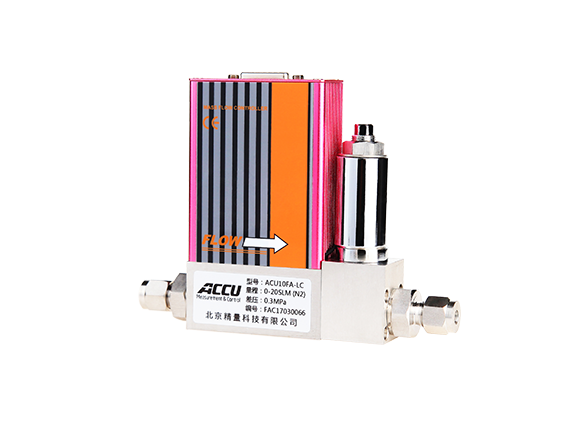
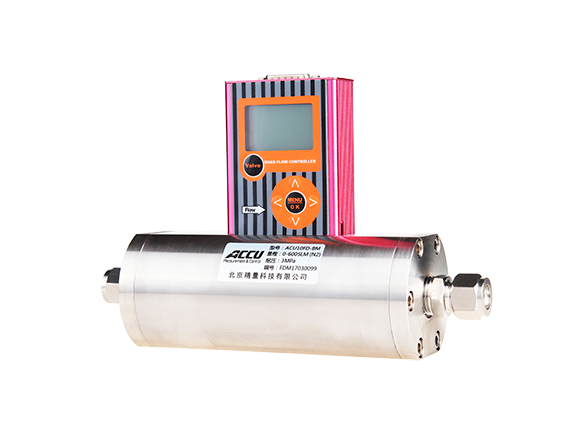
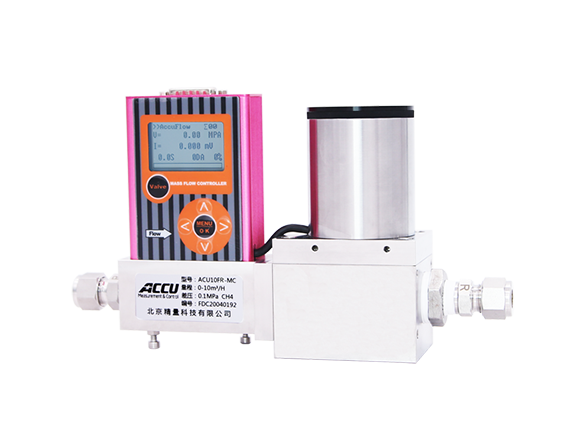
ACU20FD Normally Open Valve Series


Contact Information
Address: Room 1522/23,Building B,Ruichuang International Center,No.8Wangjingdong Road,Chaoyang District,Beijing (R&D Department)


Leave a message
If you are interested in our products, please leave your email address, and we will contact you as soon as possible, thank you!