Methods for Commissioning and Decommissioning of Mass Flow Meters

2026-03-05

Word Size

​​

Mass flow meters are widely used across various industries, including process manufacturing, food analysis, analytical testing, and metrology. Thanks to their multi-variable measurement capabilities and a 50:1 adjustable range, a single ACU10L liquid flow controller/flow meter can replace the functionality of multiple devices.

Composition of the mass flow meter:

The system comprises three main components: the sensor, the transmitter, and the display unit. The sensor’s sensing element is a measuring tube, which is installed on the pipeline. The transmitter and the display unit (in the simplified version, the display unit is omitted) are installed separately near the sensor in a location that facilitates observation and maintenance. These two components are electrically connected via a dedicated multi-core shielded cable.

Methods for putting into and taking out of service mass flow meters:

A. Before putting the mass flowmeter into operation, check whether its installation meets the requirements, whether the pipelines have been thoroughly cleaned by purging, and whether the pressure test has been completed.
B. After preheating with power for 30 minutes, start the fluid flow until the sensor temperature equals the operating temperature of the fluid. Then, close the downstream valve, ensure there are no leaks, and confirm that the pipe is fully filled before zeroing the flowmeter.
C. Open the upstream and downstream valves, close the bypass valve, and put the flowmeter into operation.
D. When the flowmeter is shut down, for media that tend to form scale, the drain valve should be opened to completely empty the flowmeter of the medium. For media that tend to solidify, the medium should be drained completely and then flushed with low-pressure steam or plant air to ensure that no medium remains in the measuring tube.

Related Products

ACU20FD Normally Open Valve Series


The ACU20FD digital mass flow meter consists of a mass flow sensor, a laminar flow splitter, a flow-control regulating valve, and an amplification and control circuit. It features digital signal input and output, short warm-up time, minimal zero drift, and high reliability.

ACU20PH Series


The ACU20PH series comes standard with a piezoelectric diaphragm pressure sensor and a digital circuit board, delivering high-precision, stable, and reliable pressure measurement and control. This basic digital PC board incorporates all the essential functions required for measurement and control. In addition to the standard RS485 output signal, the ACU20PH also provides analog I/O signals.

ACU10FA


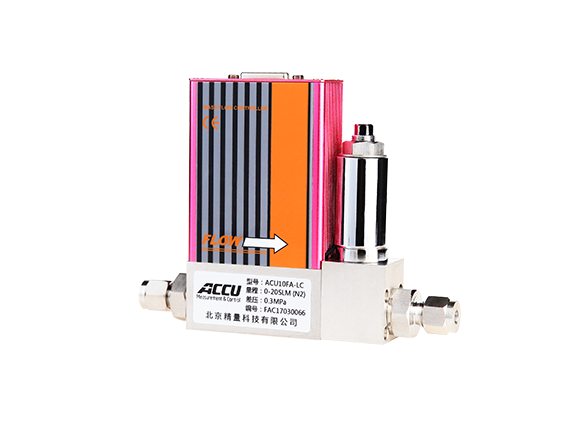
The ACU10FA analog-type mass flow controller features fast response and high precision. It offers a wide control range, with a flow rate capability spanning from 5 SCCM to 30 SLM, and can accurately measure and regulate flows as low as 1 SCCM—making it ideal for controlling even the tiniest gas flows.

ACU10FD Series


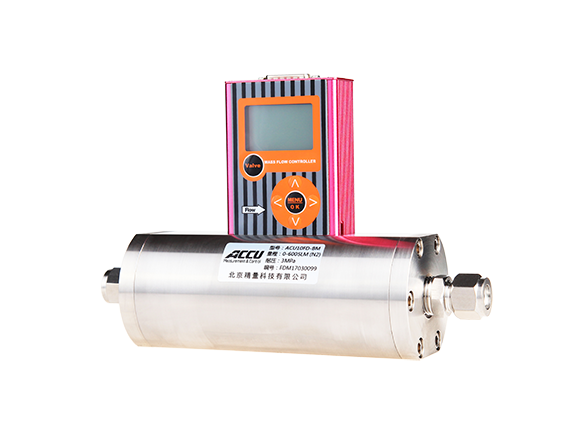
The ACU10FD digital mass flow controller consists of a mass flow sensor, laminar flow element, flow control regulating valve, and amplification control circuit. It features digital signal input and output, short warm-up time, minimal zero drift, and high reliability.

ACU10FDR


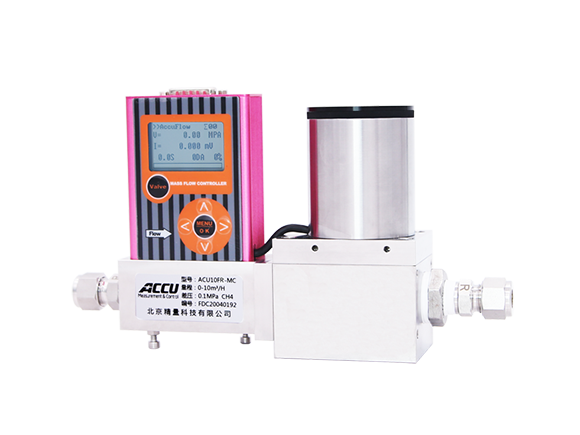
The ACU10FDR low-pressure-drop gas mass flow controller is equipped with a proprietary high-flow electromagnetic valve, making it ideal for controlling mass flow even when system pressure is nearly unavailable. Its minimal pressure differential ensures the least possible impact on the system, enabling precise flow control under near-atmospheric conditions while significantly reducing system response time. We can customize the valve and PID control features based on your specific application parameters, guaranteeing fast, stable performance with minimized pressure loss.