Common Fault Diagnosis and Troubleshooting Methods for Gas Mass Flow Controllers
2026-03-13
Word Size
1. No traffic or traffic fails to reach the set value.
Phenomenon: There is a setpoint signal, but the actual flow is zero or far below the setpoint.
Possible Causes and Troubleshooting Methods:
1. Air Source Issues: Check whether the cylinder valve is open and whether the output pressure of the regulator falls within the appropriate range (typically 0.1–0.2 MPa higher than the working pressure).
Check whether the air circuit is blocked, such as due to a clogged filter, bent tubing, or a needle valve that has been accidentally closed.
2. Valve Not Opened: Check whether the valve drive voltage indicator is functioning normally. If the valve closing voltage is too high, it may indicate a fault in the valve drive circuit.
Manual Testing: For certain models, try applying manual operating voltage and listen for a “click” sound indicating the valve has opened. If there is no movement, the valve spool may be stuck or the coil may have burned out.
3. Troubleshooting: Clean or replace the valve core assembly.
4. Incorrect Inlet Direction: Ensure that the arrow direction on the flowmeter body aligns with the gas flow direction. Reversing the connection will cause the check valve mechanism to block gas flow.
2. Unstable or highly fluctuating traffic control
Phenomenon: The actual flow continuously fluctuates above and below the set value and cannot be stabilized.
Possible Causes and Troubleshooting Methods:
Unstable or insufficient air source pressure: Use a dial-type pressure gauge to monitor whether the inlet air pressure is fluctuating. If the pressure is unstable, check whether the upstream pressure regulator is functioning properly or whether the air supply is sufficient.
Elimination: Replace with a stable gas source or install a pressure regulator.
There is a leak in the air circuit: Use leak detection fluid to inspect all connections, valve body joints, and the sealing surfaces of the flowmeter body. Even minor leaks can cause the feedback control system to continuously adjust, leading to oscillations.
Eliminate: Retighten the connections or replace the sealing gasket.
PID Parameter Mismatch: If a different gas is used or the operating pressure is changed, the original PID parameters may no longer be suitable.
Exclusion: When permitted, re‑perform automatic tuning or manually adjust the PID parameters.
Sensor contamination: The sensor capillary is partially blocked by particulate matter, causing fluctuations in the flow rate signal.
Exclusion: Requires professional cleaning or factory repair.
3. Zero Drift and Inaccurate Display
Phenomenon: There is no gas flowing through the pipeline (valve closed or gas supply cut off), but the flow rate display is not zero, or the displayed flow rate differs significantly from the actual flow rate.
Possible Causes and Troubleshooting Methods:
Zero Offset: The sensor’s zero‑point signal changes due to temperature variations, stress, or minor contamination.
Exclusion: Perform zero-point calibration. Ensure the valve is closed and there is no flow in the pipeline, then press the zero-point calibration button or zero the instrument via a communication command.
Sensor contamination or aging: If the zero point repeatedly drifts and quickly shifts again after calibration, it indicates that the sensing element has become contaminated or its performance has deteriorated.
Exclusion: Deep cleaning or sensor replacement at the factory.
Incorrect gas conversion factor setting: If the actual gas used differs from the factory‑calibrated gas and the conversion factor is not entered correctly, it will result in inaccurate displayed values.
Exclusion: Refer to the instruction manual and enter the correct gas conversion factor.
Circuit board failure: Signal distortion caused by moisture in the amplification circuit or component aging.
Exclusions: Drying treatment or factory repair.
4. Valve does not close tightly (internal leakage)
Phenomenon: Even after setting the value to zero or closing the valve, gas continues to flow downstream.
Possible Causes and Troubleshooting Methods:
Contamination of the valve seat sealing surface: Particulate matter or oil film adheres between the valve core and the valve seat, obstructing the seal.
Elimination: Try repeatedly flushing with on-off air blows, or disassemble and clean the valve core and valve seat.
Seal damage: Prolonged use or corrosive gases can cause the sealing gasket to age and deform.
Exclusion: Replace the sealing ring.
Valve spool mechanical jamming: Foreign objects become lodged in the valve spool, preventing it from fully returning to its original position.
Exclusion: Disassemble, clean, or replace the valve assembly.
V. Communication Failure
Phenomenon: The host computer cannot read the flow rate or control the setpoint.
Possible Causes and Troubleshooting Methods:
Wiring errors or poor contact: Check whether the communication lines (such as RS232, RS485) are securely connected and whether the termination resistor settings are correct.
Address/Baud Rate Conflict: When multiple devices are communicating, check whether the device addresses are duplicated and whether the baud rate settings are consistent.
Interface circuit damage: The communication chip has burned out. It needs to be sent back to the factory for repair.
VI. Recommended Diagnostic Process
Inspect the appearance: Check for oil leaks at the connectors and damage to the cables.
Listen for any unusual sounds from the valve.
Check the pressure: Ensure that the air source pressure is stable and sufficient.
Check the zero point: Observe whether the display returns to zero when there is no flow.
Manual Test: If possible, apply a manual valve control signal and observe the response.
Perform calibration: Compare with a standard flow meter to verify accuracy.
The ACU20FD digital mass flow meter consists of a mass flow sensor, a laminar flow splitter, a flow-control regulating valve, and an amplification and control circuit. It features digital signal input and output, short warm-up time, minimal zero drift, and high reliability.
The ACU20PH series comes standard with a piezoelectric diaphragm pressure sensor and a digital circuit board, delivering high-precision, stable, and reliable pressure measurement and control. This basic digital PC board incorporates all the essential functions required for measurement and control. In addition to the standard RS485 output signal, the ACU20PH also provides analog I/O signals.
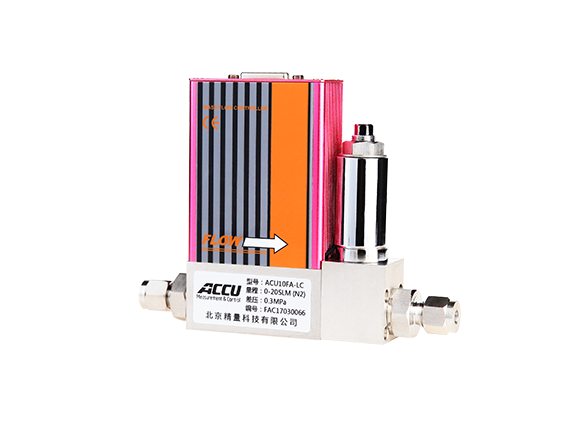
The ACU10FA analog mass flow controller features fast response and high accuracy. It offers a wide control range, spanning from 5 SCCM to 30 SLM, and can measure and regulate flow rates as low as 1 SCCM, making it suitable for controlling very small flow rates.
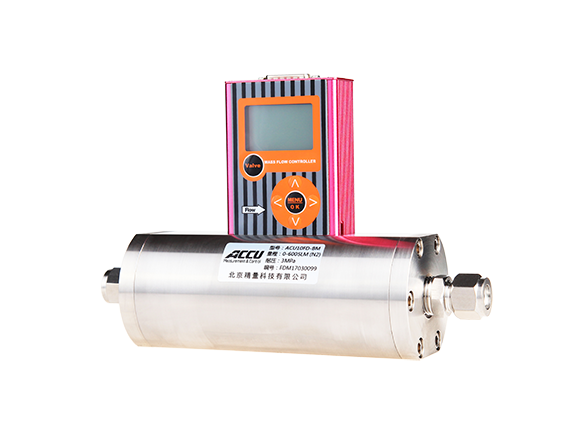
The ACU10FD digital mass flow controller comprises a mass flow sensor, a laminar flow element, a flow‑control regulating valve, and an amplification control circuit. It features digital signal input and output, short warm‑up time, low zero drift, and high reliability.
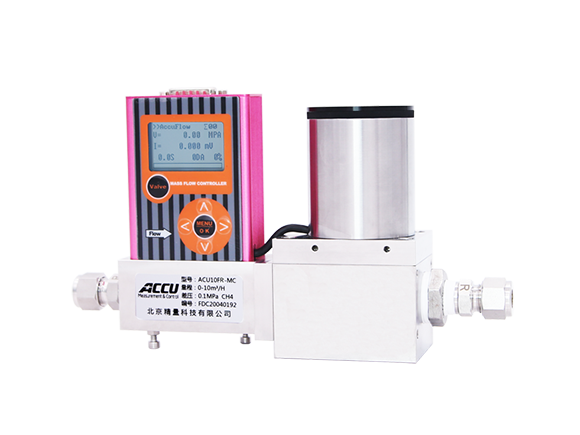
The ACU10FDR low-pressure-drop gas mass flow controller is equipped with a proprietary high-flow electromagnetic valve, making it ideal for controlling mass flow even when system pressure is nearly unavailable. Its minimal pressure differential ensures the least possible impact on the system, enabling precise flow control under near-atmospheric conditions while significantly reducing system response time. We can customize the valve and PID control features based on your specific application parameters, guaranteeing fast, stable performance with minimized pressure loss.