

Thermal Gas Mass Flow Meters: A Comprehensive Analysis of Principles, Advantages, and Industrial Applications
As photovoltaic manufacturing advances toward greater efficiency and precision—particularly in the deposition of PECVD silicon nitride anti-reflective coatings, as well as in gas control for various processes such as cleanrooms in semiconductor production and exhaust-gas treatment systems in environmental protection equipment—accurate measurement of the mass flow rate of gases within pipelines is essential for ensuring production safety and enhancing operational efficiency. The core equipment for accomplishing this critical task is none other than the thermal gas mass flow meter. Leveraging its unique thermal diffusion principle, it maintains stable performance even in harsh operating environments, making it an indispensable piece of core instrumentation in industrial applications.
The operating principle of thermal gas mass flow meters is based on the well-established and reliable thermal diffusion technique—simply put, it exploits the heat-transfer-induced alteration in the temperature distribution along the wall of a capillary tube caused by the flowing fluid. The instrument comprises a mass flow sensor, a laminar-flow splitter, a flow-control regulating valve, and an amplification and control circuit, among other components.
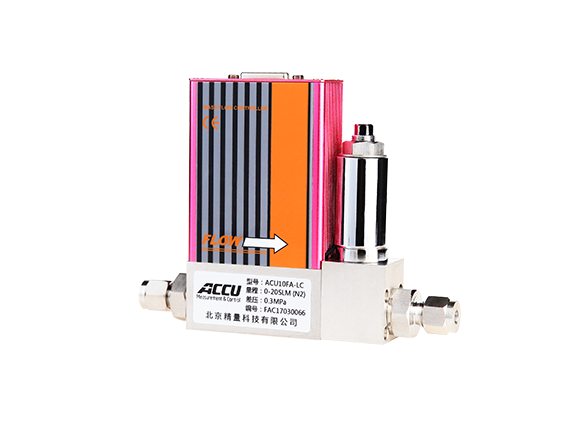
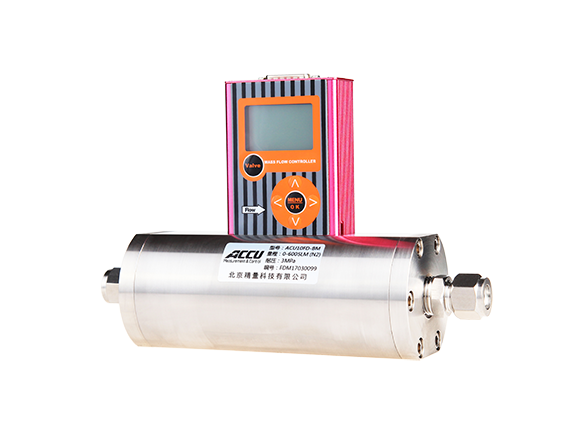
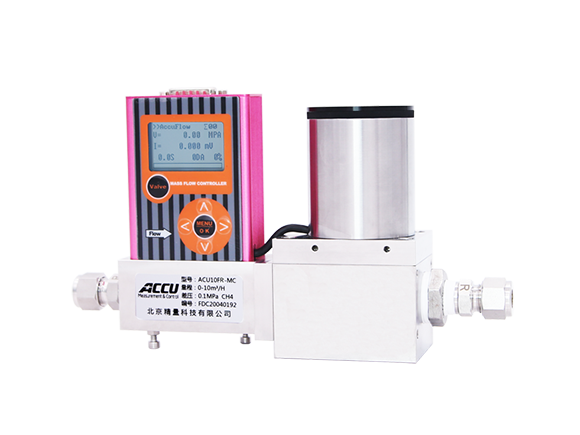
Thermal Gas Mass Flow Controller/Flow Meter Its widespread application in the industrial sector is attributable to its outstanding advantage of adapting to complex operating conditions:
• High stability, suitable for demanding conditions : Exhibits exceptionally high reliability, operating stably in both high-temperature and high-pressure environments as well as in the presence of corrosive, flammable, and explosive special gases, with measurement accuracy that is largely unaffected by environmental variations.
• Precise measurement, no additional compensation required : Directly measures the mass flow rate of gases, unaffected by pressure and temperature fluctuations, eliminates the need for additional compensation devices, and delivers more direct and accurate measurement results.
• Simple structure, low maintenance costs : The core component consists of only two temperature sensors, with no complex mechanical rotating parts, resulting in minimal wear and a low failure rate. Routine operation requires virtually no complicated maintenance, effectively reducing O&M costs in industrial production.
• Rapid response, closed-loop control : Millisecond-level response is enabled by a highly integrated, closed-loop control system. The controller compares the measured flow rate with the setpoint and uses a PID algorithm to drive a proportional valve, thereby adjusting the valve opening to achieve precise flow control.
From traditional industry to high-precision, cutting-edge manufacturing, Thermal Gas Mass Flow Controller/Flow Meter Its applications are ubiquitous, playing a critical role especially in scenarios that require precise control of gas flow:
• Semiconductor Manufacturing : In processes such as chemical vapor deposition (CVD), atomic layer deposition (ALD), and plasma etching, precise delivery of gases like silane and ammonia is required, demanding ultra-high accuracy (±0.5% of reading or better), excellent repeatability, and millisecond-level response.
• Photovoltaic Industry : In the production of silicon-based and thin-film solar cells, precise control of the flow rates of silane, ammonia, and hydrogen directly affects the cells’ photoelectric conversion efficiency and manufacturing yield.
• Hydrogen Energy and Fuel Cell Testing The hydrogen flow rate can span more than 1:100, ranging from low currents (on the order of milliamperes) to the rated current, thereby requiring mass flow controllers (MFCs) to feature a wide turndown ratio, explosion-proof design, and millisecond-level response.
• Lithium-ion battery material preparation In the fluidized-bed CVD process for silicon–carbon anodes, the precision of flow-rate control for silane and acetylene directly affects the uniformity of silicon deposition and product consistency.
• Biopharmaceuticals : Precisely control the mixing ratios of oxygen, carbon dioxide, and nitrogen in the bioreactor to create an optimal gaseous environment for cell growth.
• Scientific Research Experiments : Precise control of trace gases is essential in applications such as catalytic reaction evaluation, new material synthesis, and trace pollutant analysis.
Related Products

ACU20FD Normally Open Valve Series


Contact Information
Address: Room 1522/23,Building B,Ruichuang International Center,No.8Wangjingdong Road,Chaoyang District,Beijing (R&D Department)


Leave a message
If you are interested in our products, please leave your email address, and we will contact you as soon as possible, thank you!