

Characteristics and Applications of Laminar Flow Differential Pressure Mass Flow Controllers
Laminar-flow differential-pressure mass flow meters have become core instruments for industrial flow measurement due to their high accuracy, wide turndown ratio, and strong adaptability. Their operating principle is based on Bernoulli’s equation and the continuity equation: a throttling device—such as an orifice plate or a Venturi tube—increases the fluid velocity while reducing the static pressure, thereby generating a differential pressure that is proportional to the square root of the mass flow rate. By incorporating fluid density, temperature, and other relevant parameters, and after conversion by a differential-pressure transmitter, a standardized flow signal is output.
In recent years, laminar-flow differential-pressure mass flow control products have been widely adopted in advanced manufacturing sectors such as semiconductors, photovoltaics, biomedicine, and specialized industries, thanks to their outstanding advantages, including high accuracy, rapid response, low zero drift, and compatibility with multiple gases.
Core Advantages:
1. High-precision measurement: By employing high-accuracy pressure sensors and intelligent signal-processing algorithms, the system can precisely detect even minute differential-pressure variations. It is particularly well-suited for measuring high-flow-rate, high-density fluids, meeting the ±0.5% accuracy requirements of industries such as chemical processing and power generation.
2. Wide turndown ratio: With a turndown ratio of 10:1 or greater, the instrument can accurately measure flow rates across a broad range—from very low velocities up to full-scale—making it well-suited for intermittent production processes with significant flow fluctuations.
3. High adaptability: Supports measurement of gases, liquids, steam, and mixtures containing solid particles; withstands high temperature and high pressure (e.g., steam pipeline measurements up to 600°C and 10 MPa); exhibits strong corrosion resistance; suitable for harsh operating conditions in industries such as petroleum and metallurgy.
Standardization and Cost-Effectiveness: Compliant with international standards such as ISO 5167, these devices deliver assured measurement accuracy without the need for individual calibration, while featuring a simple design and low maintenance costs, resulting in significant cost advantages in large-diameter flow measurement.
Among them, the ACU20FC series, as a high-precision differential-pressure flow controller/flow meter, leverages a differential-pressure mass-flow measurement principle that exhibits no thermal drift and no response lag, coupled with outstanding product accuracy, to simultaneously display and output key parameters in real time, including instantaneous flow, cumulative flow, pressure, and temperature. When flow control functionality is required, an optional solenoid proportional control valve and a built-in PID control module can be configured to enable closed-loop precision control. 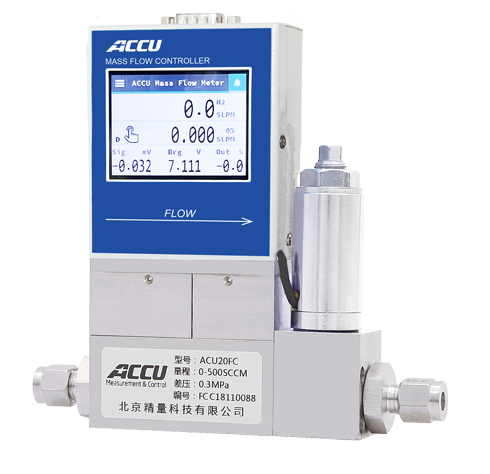

Features of the ACU20FC High-Precision Series Differential-Pressure Flow Controller/Flow Meter:
◆ No thermal drift; negligible temperature and time drift; long-term stability of 0.1% F.S./year.
◆ Accuracy of 0.5%; measurement range can be set via buttons within a 100:1 span, no calibration required.
◆ Simultaneous display of instantaneous and cumulative flow, pressure, and temperature
◆ No warm-up required; no response lag during measurement.
◆ Built-in 30 gas conversion coefficients; negligible additional error in specific heat capacity, with no impact on accuracy.
The ACU20FC differential-pressure mass flow controller employs a differential-pressure-based mass measurement principle that exhibits no thermal drift and no response lag, enabling simultaneous display and output of instantaneous flow, cumulative flow, pressure, temperature, and other parameters. When control functionality is required, it can be equipped with a solenoid proportional control valve and a built-in PID control function. Unlike thermal mass flow meters, the ACU20FC differential-pressure mass flow controller does not incur additional “specific heat” errors when gas conversion factors are applied. Consequently, even if the measured gas differs from the calibration gas used at the factory, measurement accuracy remains unaffected.
Typical application scenarios:
Petrochemical Industry: Trade settlement for crude oil and natural gas, as well as process gas flow monitoring, to ensure production safety and economic efficiency.
Power industry: measurement of boiler steam flow to optimize combustion efficiency and reduce energy consumption.
Environmental Monitoring: Real-time monitoring of exhaust gas and wastewater discharge flow rates to help enterprises achieve compliance with emission standards.
Food and Pharmaceutical Industries: Hygienic differential-pressure flowmeters are used for measuring clean fluids such as pure steam and water for injection, in full compliance with GMP requirements.
Related Products

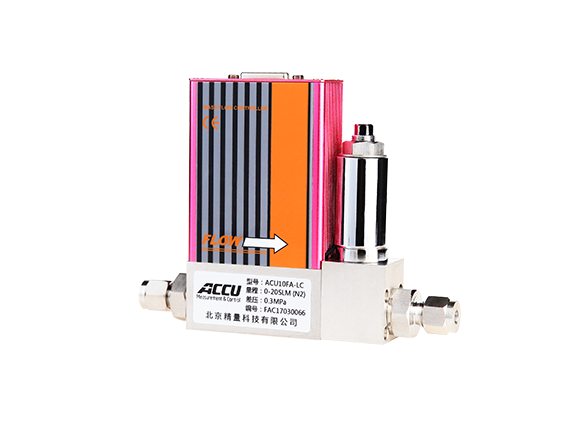
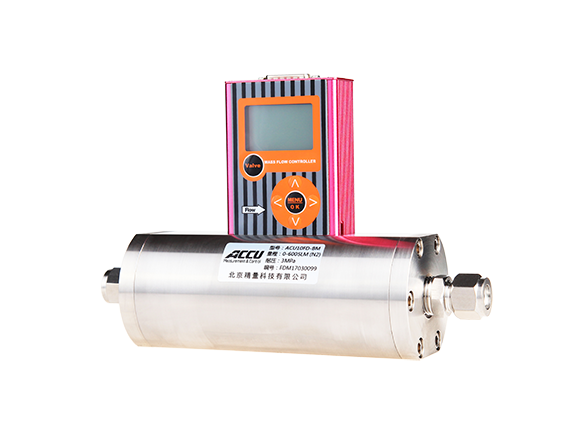
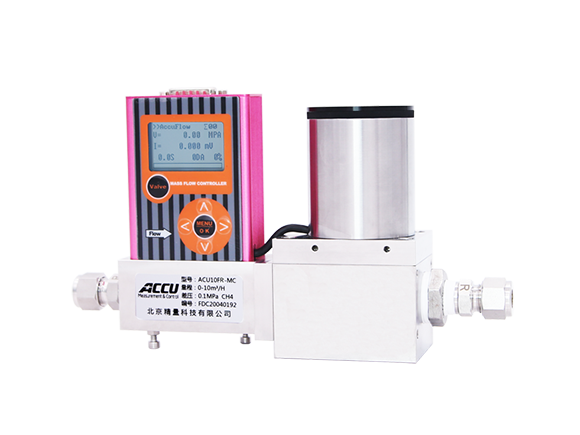
ACU20FD Normally Open Valve Series


Contact Information
Address: Room 1522/23,Building B,Ruichuang International Center,No.8Wangjingdong Road,Chaoyang District,Beijing (R&D Department)


Leave a message
If you are interested in our products, please leave your email address, and we will contact you as soon as possible, thank you!