

Application of a Multi-Component Dynamic Gas-Blending System in the Preparation Process of Ultra-High-Temperature Flue-Gas Denitrification Catalysts
Introduction

As industrialization continues to advance, regulatory requirements for controlling flue‑gas pollutants in sectors such as thermal power, metallurgy, and chemical manufacturing are becoming increasingly stringent, making nitrogen oxide (NOx) control a central issue in atmospheric pollution prevention and control. Whether in catalytic reaction research, environmental monitoring, industrial process optimization, or cell culture in biomedicine, a dynamic gas‑mixing system capable of precisely regulating gas flow rates and concentrations is indispensable. Its core function is to dynamically adjust the flow rates and mixing ratios of multiple gas streams in real time, producing stable, reproducible gas mixtures that can simulate complex operating conditions. In today’s pursuit of precision and efficiency, such equipment provides laboratories with a stable, reliable, flexible, and repeatable platform for simulating complex gas environments.
Industry Background
In a laboratory study on ultra‑high‑temperature flue‑gas denitrification catalysts, it is necessary to blend gases such as hydrogen sulfide, ammonia, nitrogen, sulfur dioxide, and carbon monoxide in specific proportions to serve as the reaction gas. Traditional gas‑mixing methods suffer from fixed component ratios and an inability to adjust them in real time. When experiments require gradient‑concentration testing or multi‑factor atmosphere studies, operators face cumbersome procedures and limited measurement accuracy—particularly when capturing low‑concentration gases over a wide dynamic range—resulting in delayed experimental data and the accumulation of process‑control errors.
The customer’s requirements are as follows:
1. Wide-range, precise quantification: The solution must exhibit high sensitivity to low-concentration gases at the ppm level, reliably achieve precise gas quantification, and remain unaffected by environmental factors.
2. Long-term continuous stable operation: The gas distribution system must exhibit excellent long-term stability and rapid response, thereby shortening process commissioning time and enhancing both experimental and production efficiency.
3. High-precision flow control: Research and testing applications demand exceptionally high repeatability; each mass flow controller in every gas channel must deliver outstanding performance, ensuring stable concentration levels even during prolonged continuous operation.
4. Flexible customization for multiple operating conditions: It is compatible with the diverse experimental and operational requirements of ultra‑high‑temperature flue‑gas denitrification catalysts, meeting mixed‑gas distribution needs across different gas media and measurement ranges, and allows flexible adjustment of gas‑mixing ratios based on process parameters.
Solution

▲ ACCU Multi-Component Dynamic Gas Mixing System
In response to customers’ demand for denitrification catalytic processes for ultra-high-temperature flue gases, ACCU Beijing Precision Technology (abbreviated as “ACCU”) Leveraging its deep technical expertise in the field of precision fluid measurement and control, it has been custom-designed to… Nine-air-inlet paths, eight-component blending, single-output path (i.e., supports connection of nine gas sources, with up to eight of them capable of dynamic blending in any proportion, yielding a single standard mixed gas output) A multi-component dynamic gas distribution system for the structure.
The ACCU multi-component dynamic gas‑mixing system utilizes the ACU10FD‑LC digital gas mass flow controller. At its core, the system employs a multi-channel precision flow‑control architecture that supports simultaneous connection of nine gas inlet channels (customizable), each equipped with an independent high‑precision mass flow controller. After gases from different sources are routed into the instrument via their respective lines, the mass flow controllers precisely regulate the flow rate of each stream according to a pre‑set program. Whether it’s nitrogen, oxygen, or specialized reactive gases, all can be accurately measured, controlled, and mixed on the same platform, enabling precise gas blending and proportioning even under demanding operating conditions—and truly making complex gas mixtures manageable.
I. Core Advantages of the ACCU Multi-Component Dynamic Gas Mixing System
The ACU10FD employs the thermal mass flow measurement principle, which relies on the heat‑transfer‑induced change in the temperature distribution along a capillary tube. By measuring the temperature difference across the capillary before and after heat transfer, it calculates the gas mass flow rate. Its key advantages include:
1. High precision and stability
The ACU10FD mass flow controller directly regulates the actual mass flow, ensuring that the set concentration remains unaffected by ambient temperature or pressure fluctuations and enabling precise control of gas mixing ratios. It delivers long-term stable flow regulation with a response time of less than 0.8 seconds, meeting the demands of rapid experimental responses.
2. Flexible multi-component formulation
A multi-component dynamic gas‑mixing system must exhibit excellent long-term stability and rapid response, enabling smooth ramping or stepwise switching among multiple gas streams to generate precise simulated atmospheres such as flue gas or fuel‑cell reformate. The number of channels can be customized to meet specific requirements, and the system supports the blending of multi‑component gases.
3. Intelligent Operation and Scalability
Equipped with a 10-inch capacitive touchscreen, it eliminates the need for cumbersome valve adjustments, offering an intuitive interface that allows for easy setting and fine-tuning of gas mixing ratios. This single device enables dynamic measurement and control of multiple gas components, supporting wide-range regulation across both high- and low-concentration gases.
4. Security and Compatibility
With a pressure rating of 3 MPa, the operating differential pressure range spans 0.1 to 0.5 MPa. It supports multiple input signals (RS‑232/485, MODBUS protocol, etc.), features automated PID control, and offers user-friendly operation, making it easy to integrate into laboratory automation systems.
5. Corrosion-resistant, low adsorption
For reactive and corrosive gases such as SO₂, H₂S, and NH₃, the inner surfaces of the system’s piping are treated with a specialized anti-corrosion, low‑adsorption coating, effectively preventing gas residues and unwanted reactions on the pipe walls. The piping is constructed from 316L stainless steel, making it suitable for both electronic‑grade high‑purity gases and flammable gas applications.
II. Operating Condition Parameters: 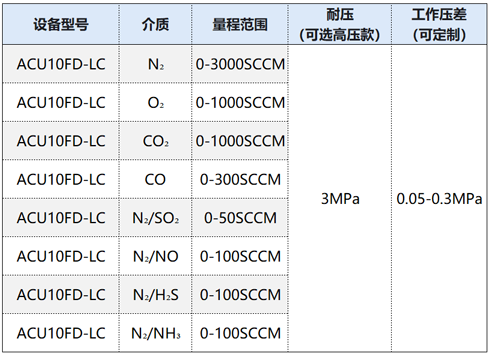

Note: The parameters listed above are customized configurations for this solution. ACCU can, based on the customer’s actual production conditions, provide solutions with different measurement ranges, interfaces, and communication protocols.
Scope of Application

▲ Three-dimensional diagram of a nine-in, eight-out, one-out multi-component dynamic gas‑mixing system.
Thanks to its outstanding performance, the ACCU multi-component dynamic gas‑mixing system serves applications far beyond a single domain:
• Petrochemical industry: Used to precisely control gas mixing ratios in the production process, ensuring product quality and operational safety.
• In scientific research experiments: It is used in fields such as materials science and chemical engineering to investigate the effects of varying gas mixture ratios on experimental outcomes.
• Environmental monitoring: It can simulate various scenarios, such as vehicle exhaust and industrial VOC emissions, to verify the sensitivity and selectivity of detection instruments.
• In the field of catalyst evaluation: it enables dynamic gas blending under high temperature and high pressure, thereby accelerating research into catalytic reaction mechanisms.
• Biopharmaceutical R&D: Carbon dioxide, oxygen, and nitrogen can be used to precisely control the incubator’s climate, providing a programmable gaseous environment for dynamic cellular response experiments.
• Environmental monitoring: There is a need to prepare complex standard gas mixtures that include multiple pollutant gases—such as sulfur dioxide, nitrogen oxides, and volatile organic compounds—as well as various background gases, enabling precise and stable delivery of these multi-component gas mixtures.
Conclusion
Against the backdrop of the research and experimental landscape advancing toward greater precision and standardization, the reproducibility of gas environments and the accuracy of measurement and control are fundamental to catalysis R&D. The ACCU multi-component dynamic gas‑mixing system integrates precise flow control, corrosion‑resistant fluid path design, and intelligent PID closed-loop regulation to deliver a stable, flexible, and reliable gas environment for both academic and industrial users, ensuring the repeatability of every data point from the very outset. ACCU continues to deepen its expertise in precision fluid measurement and control, providing tailored solutions that drive technological upgrades across sectors such as environmental catalysis, materials chemistry, and environmental monitoring.
Previous page
Previous page:
Related Products

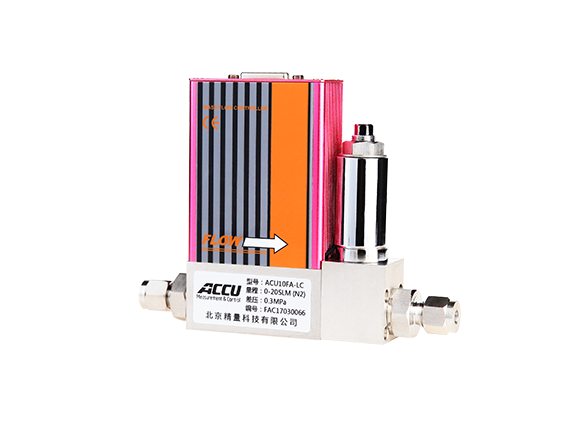
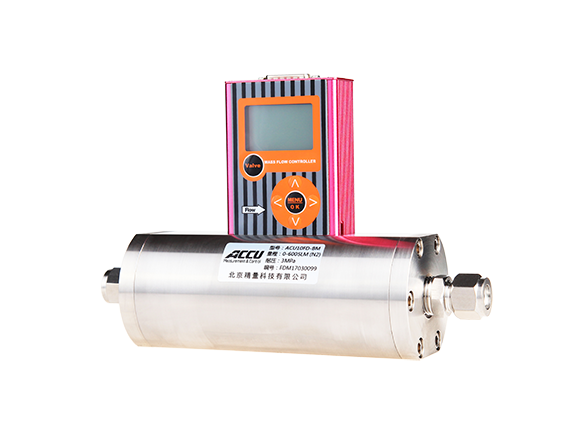
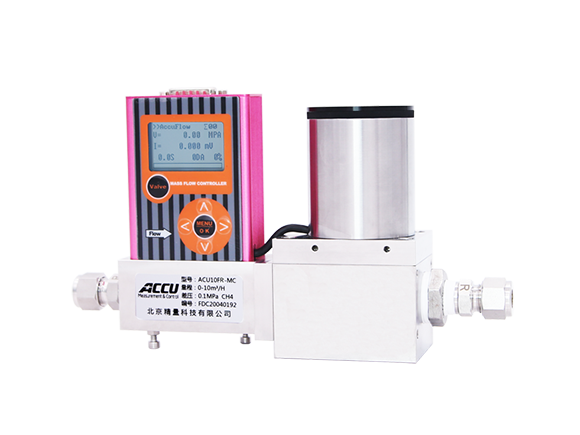
ACU20FD Normally Open Valve Series


Contact Information
Address: Room 1522/23,Building B,Ruichuang International Center,No.8Wangjingdong Road,Chaoyang District,Beijing (R&D Department)


Leave a message
If you are interested in our products, please leave your email address, and we will contact you as soon as possible, thank you!