What are the advantages of mass flow controllers?

2025-06-16

Word Size

Working principle and advantages of mass flow controllers
 
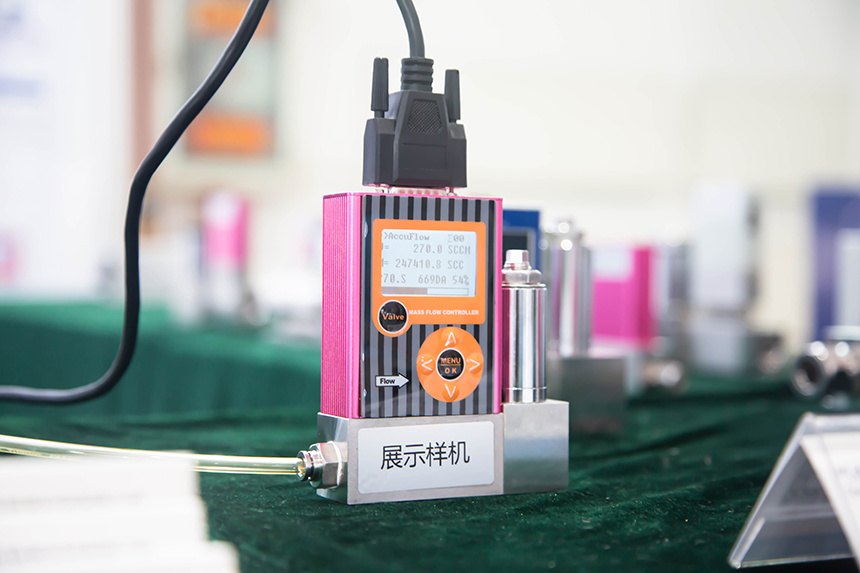
1、 Mass flow controller It usually consists of a circuit board, sensor, inlet and outlet pipe fittings, a flow divider pipe, a casing, a regulating valve, and other components. Its operating power supply, flow display, and setting operations are provided by the matching flow display power supply.
 
2、Mass flow controllers can be used to control various clean and dry gases, including corrosive and special gases. However, for corrosive and special gases, appropriate models and sealing materials must be selected.
 
3、Mass flow controllers are a new type of flow metering and monitoring instrument that can conveniently and accurately monitor various gases flowing in pipelines without temperature and pressure compensation.
 

4、Mass flow controllers use the thermal diffusion principle. Thermal diffusion technology is a technology with excellent performance and high reliability under harsh conditions.


5、Mass flow controllers are instruments that use the principle of heat conduction to measure fluid flow. Mass flow controllers use the constant temperature difference method to accurately measure gas mass flow. Mass flow controllers have advantages such as small size, high degree of digitalization, easy installation, and accurate measurement.

ACCU10FD Digital Mass Flow Controller/Flow Meter It consists of a mass flow sensor, a laminar flow element, a flow controller regulating valve, and an amplifier control circuit. It is made using the heat conduction distribution effect, where the heat transfer of the flowing fluid changes the temperature distribution of the measuring capillary wall.
 

ACCU10FD Digital Mass Flow Controller/Flow Meter It uses the principle of calorimetry of the temperature difference before and after capillary heat transfer to measure the mass flow rate of gas, unaffected by temperature and pressure. The flow signal measured by the sensor is amplified and then compared with the set voltage. The resulting difference is used to drive the control regulating valve, closing the loop to control the flow through the channel so that it is equal to the set flow.


Related Products

ACU20FD Normally Open Valve Series


The ACU20FD digital mass flow meter comprises a mass flow sensor, a laminar‑flow element, a flow‑control regulating valve, and an amplification‑and‑control circuit. It employs digital signal input and output and features short warm‑up time, minimal zero drift, and high reliability.

ACU20PH Series


The ACU20PH series comes standard with a piezoelectric diaphragm‑type pressure sensor and a digital circuit board, delivering high‑accuracy, stable, and reliable pressure measurement and control. This basic digital PC board incorporates all the essential functions required for measurement and control. In addition to the standard RS485 output signal, the ACU20PH also offers analog I/O signals.

ACU10FA Series


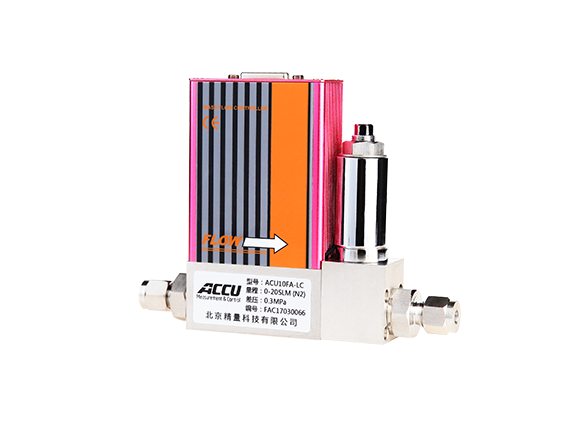
The ACU10FA analog mass flow controller features fast response and high accuracy. It offers a wide control range, from 5 SCCM to 30 SLM, and can measure and regulate flow rates as low as 1 SCCM, making it suitable for controlling very small flow rates.

ACU10FD Series


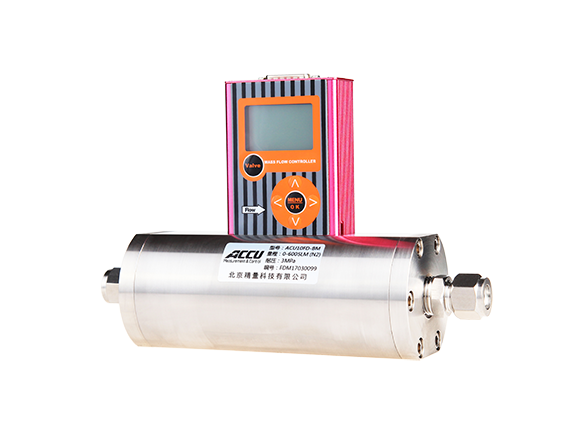
The ACU10FD digital mass flow controller comprises a mass flow sensor, a laminar flow element, a flow‑control regulating valve, and an amplification control circuit. It features digital signal input and output, short warm‑up time, low zero drift, and high reliability.

ACU10FDR


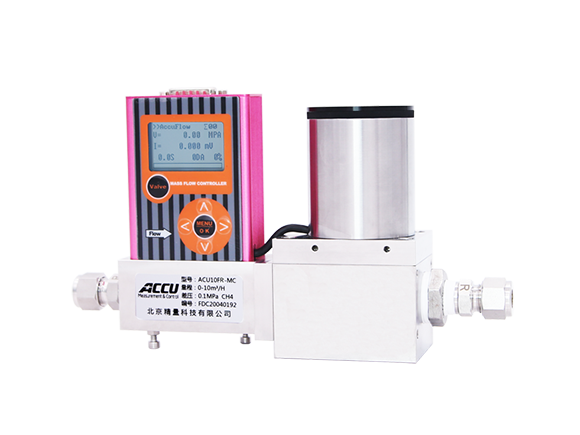
The ACU10FDR low-pressure-drop gas mass flow controller is equipped with a proprietary high-flow electromagnetic valve, making it ideal for controlling mass flow even when system pressure is nearly unavailable. Its minimal pressure differential ensures the least possible impact on the system, enabling precise flow control under near-atmospheric conditions while significantly reducing system response time. We can customize the valve and PID control features based on your specific application parameters, guaranteeing fast, stable performance with minimized pressure loss.