

Key Considerations for Selecting a High-Pressure Gas Flow Meter
In industrial sectors such as petrochemicals, energy storage and transportation, hydrogen‑energy equipment, and high‑pressure air separation, precise measurement of high‑pressure gases serves as a critical enabler for accurate process control, granular energy‑consumption accounting, and the intrinsic safety of production systems.
Under high-pressure operating conditions, gases exhibit characteristics such as high density, a compressibility factor significantly deviating from unity, complex flow-field distributions, and severe transient pressure fluctuations, thereby imposing technical requirements on flowmeters—regarding structural strength, sealing reliability, measurement stability, and anti-interference capability—that are far more stringent than those for ambient-pressure conditions.
To this end, the selection of flow meters must be grounded in actual operating conditions and based on a comprehensive assessment of relevant key parameters, thereby preventing measurement errors, equipment damage, or safety hazards resulting from inappropriate sizing. Our ACU20FD high‑accuracy mass flow meter (40 MPa) and the ACU20FE Coriolis mass flow meter, among other products, have already demonstrated excellent performance and adaptability in the field of high‑pressure gas measurement and control.
Key technical considerations for selecting a core model of high-pressure gas flow meters:
The primary factor is the equipment’s ability to withstand high-pressure conditions. The flowmeter’s rated pressure rating should exceed the actual operating pressure and feature a robust sealing design to prevent leaks, ensuring reliable long-term operation under sustained high pressure or transient pressure surges.
Secondly, selection should be based on the specific physicochemical properties of the gas medium. For example, corrosive gases require contact components with appropriate corrosion resistance, while dusty gases call for designs that resist deposition and abrasion to prevent internal blockage or wear from compromising measurement performance. Take the ACU20FD (40 MPa) as an example: it employs a thermal mass flow principle, providing direct mass flow output and remaining unaffected by pressure fluctuations under stable high‑pressure conditions with clean gas compositions. It delivers rapid response and achieves highly repeatable measurements. Furthermore, its compact form factor and standard interface design facilitate integration with existing pipeline layouts and installation spaces, simplifying both installation and maintenance.

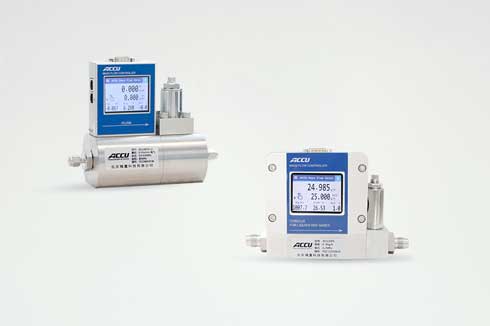
For various high-pressure operating conditions, differentiated measurement and control solutions should be developed in conjunction with gas characteristics, pressure ratings, and flow‑rate requirements, to ensure the accuracy and repeatability of the data. Among these, ACU20FD High-Precision Mass Flow Meter (40 MPa) Employing capillary‑based thermal sensing technology with no moving parts, it delivers rapid response and high repeatability even in high‑pressure gas environments. Moreover, for operating conditions involving high pressure and large flow rates, as well as measurements of supercritical fluids or high‑density gases at elevated temperatures, ACU20FE Coriolis Mass Flow Meter They directly measure mass flow rate, unaffected by changes in gas composition or density, and maintain high accuracy and stability even near the gas–liquid transition point or under high-pressure conditions. Both types of flow meters are well-suited for high-pressure environments, offering excellent measurement accuracy; their gas‑connection components feature a simple, safe, and reliable design that is easy to maintain. Coupled with high‑performance sensors and optimized mass‑flow calculation algorithms, they enable precise metering of high‑pressure gases.
In summary, the proper selection and precise measurement of high-pressure gas flow meters are critical components for ensuring efficient, safe, and energy‑saving operations in industrial production, scientific research, and other fields. When selecting a meter, it is essential to focus on key factors such as pressure rating, media compatibility, accuracy and range, and operational adaptability. By aligning these considerations with the specific characteristics of the process medium and the requirements of the operating conditions, a tailored measurement solution can be developed to achieve accurate metering of high‑pressure gases.
Related Products

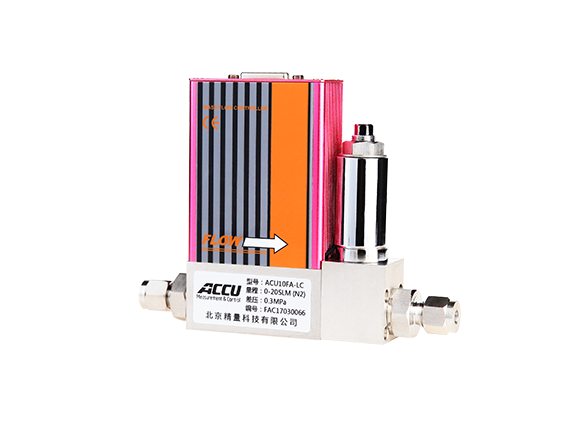
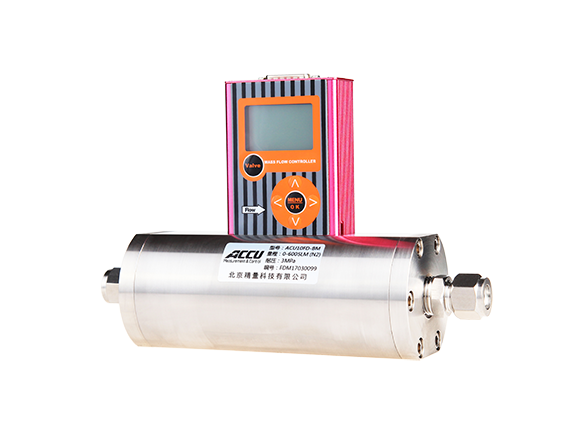
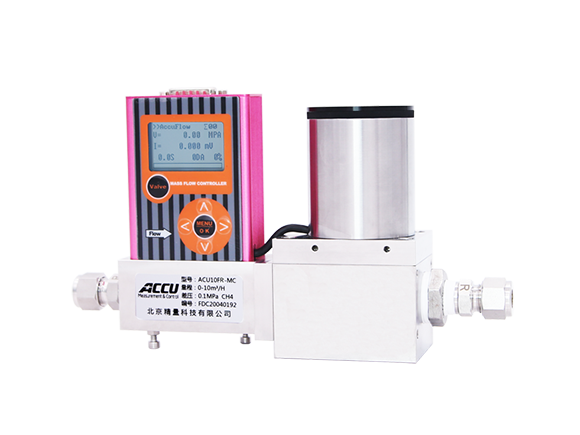
ACU20FD Normally Open Valve Series


Contact Information
Address: Room 1522/23,Building B,Ruichuang International Center,No.8Wangjingdong Road,Chaoyang District,Beijing (R&D Department)


Leave a message
If you are interested in our products, please leave your email address, and we will contact you as soon as possible, thank you!