

Challenges and Applications of Liquid Mass Flow Controllers
In the production chains of high-end manufacturing sectors such as semiconductors, biopharmaceuticals, and fine chemicals, the liquid mass flow controller stands as a critical “invisible core component.” Acting like a precision valve on an advanced production line, it accurately regulates both the flow rate and total volume of every drop of process fluid, directly determining the stability of reaction processes, the consistency of product quality, and compliance with regulatory standards. As Industry 4.0 gains momentum and manufacturing precision continues to advance, liquid flow control has evolved from a mere “transportation step” into a pivotal technological node that can make or break the entire production system.
Unique Technical Challenges in Liquid Flow Control
Compared with gas flow control, liquid flow control poses far more complex technical challenges, owing to the fundamentally different physical properties of liquids and gases:
Incompressibility: Liquids are nearly incompressible, pressure waves propagate extremely rapidly through pipelines, and the system exhibits minimal dead volume. This necessitates that the flow controller’s control valve and control algorithm deliver faster dynamic response and higher regulation accuracy. Even the slightest overshoot can immediately trigger substantial flow fluctuations, posing a far greater challenge to the control loop than in gas‑based systems.
Material property parameters have a significant impact: The physical properties of liquids—such as viscosity, density, and surface tension—exert a far greater influence on flow measurement and control than they do for gases. In particular, viscosity varies significantly with temperature and pressure (especially temperature), directly affecting the flow‑resistance characteristics of laminar‑flow elements and the accuracy of measurements. Consequently, an effective temperature–viscosity compensation algorithm is essential for achieving high‑accuracy measurements in such controllers.
Two-phase flow risk: During transportation, liquids are prone to bubble formation or vaporization, resulting in gas–liquid two-phase flow. This can severely compromise the accuracy of flow measurements and even cause the control system to fail.
High chemical compatibility requirements: Many process fluids are corrosive, toxic, or flammable and explosive, necessitating that the wetted parts of flow controllers exhibit excellent chemical compatibility and sealing performance.

Our company’s independently developed ACU20L Series Liquid Mass Flow Controllers / Flow Meters Employing an innovative internally compensated laminar‑flow differential pressure technology, it fundamentally addresses the numerous pain points of conventional liquid flow measurement methods, providing high‑precision, highly stable, and fast‑response liquid flow measurement and control solutions for advanced manufacturing. It can simultaneously display and output key parameters such as instantaneous flow, cumulative flow, pressure, and temperature.
Thanks to their outstanding performance, liquid mass flow controllers have been widely adopted across numerous high-end manufacturing sectors:
1. Semiconductor manufacturing
In semiconductor manufacturing, the precise delivery of process fluids—such as photoresist, developer, etchant, and cleaning solutions—is critical to ensuring high yield. Liquid mass flow controllers enable accurate control of these high-value fluids, guaranteeing uniform resist thickness and consistent etch depth, thereby effectively improving chip yield and reducing production costs.
2. Precision Chemicals
In the production of fine chemicals and specialty chemicals, the precise proportioning of various raw materials directly affects product purity and yield. Liquid mass flow controllers can accurately regulate both the instantaneous flow rate and the cumulative delivery volume of multiple feedstocks, enabling stringent ratio control. This ensures process stability and consistency, laying the groundwork for enhancing product purity and yield.
3. Laboratory Analytical Instruments
In laboratory analytical instruments such as chromatographs, mass spectrometers, and liquid chromatographs, the precise delivery of carrier fluids and samples is essential for ensuring the accuracy of analytical results. The high precision and exceptional stability of liquid mass flow controllers provide reliable fluid‑control performance, thereby enhancing the reproducibility and reliability of analytical outcomes.
4. Environmental Monitoring
In environmental protection fields such as water quality monitoring and industrial wastewater treatment, liquid mass flow controllers can precisely regulate sampling flow rates and reagent dosing, ensuring the accuracy of monitoring data and the stability of treatment performance, thereby providing reliable technical support for environmental protection.
Related Products

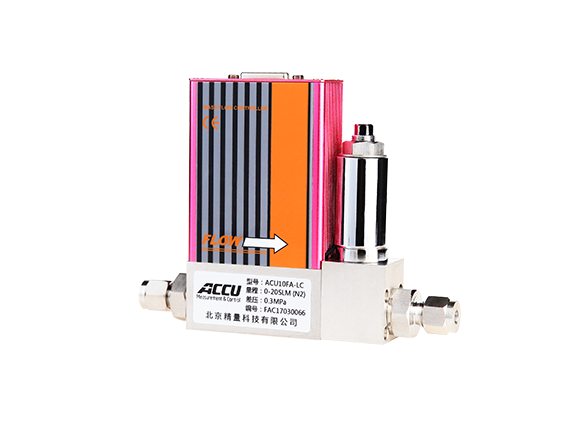
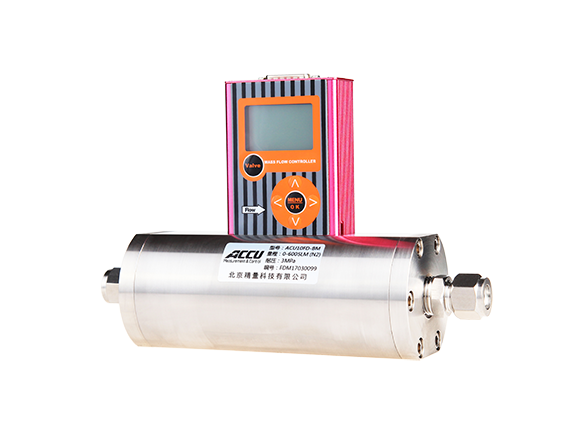
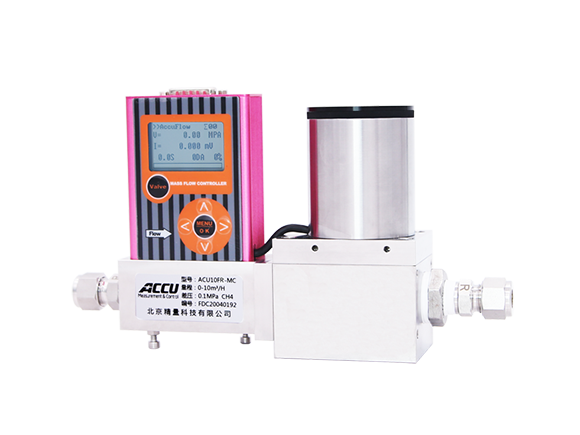
ACU20FD Normally Open Valve Series


Contact Information
Address: Room 1522/23,Building B,Ruichuang International Center,No.8Wangjingdong Road,Chaoyang District,Beijing (R&D Department)


Leave a message
If you are interested in our products, please leave your email address, and we will contact you as soon as possible, thank you!