

Mass Flow Controller: The Cornerstone of Semiconductor Gas Delivery Systems
In semiconductor manufacturing processes, core steps such as etching, thin-film deposition, ion implantation, cleaning, and CMP (chemical mechanical polishing) all rely on the precise measurement and accurate control of various gas flow rates. As a critical component of the gas‑delivery system in semiconductor equipment, the mass flow controller (MFC) provides this essential support. According to market data, in 2024, the Chinese semiconductor industry’s MFC application market reached RMB 1.23 billion, up 9.82% year over year. By 2028, the global MFC market is projected to grow to US$3.3 billion, with a compound annual growth rate of 14.0%, while the domestic market is expected to expand at an even faster pace, ranging from 20% to 30%.
MFC’s core value stems from its comprehensive adherence to the stringent requirements of the semiconductor industry. To meet process requirements, the MFC must be equipped with High accuracy (better than ±0.5% FS), corrosion resistance, a wide measurement range (covering from sccm to slm levels), and millisecond‑level fast response. It delivers exceptional performance and meets the semiconductor industry’s stringent requirements for fluid purity and process stability. Typical application scenarios include deposition, etching, ion implantation, cleaning, and CMP equipment, as well as gas supply systems and vertical/horizontal furnaces.

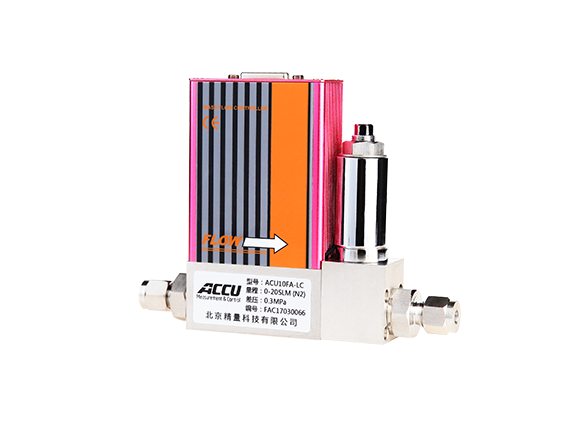
▲ ACU10FD-LC Digital mass flow controller
The MFC consists of a high-sensitivity measurement sensor, precision control valves, and a flow calculator working in concert to detect the instantaneous mass flow rate of gases in real time and achieve adjustments with millimeter‑level accuracy via closed-loop control. The ACU10FD and ACU20FD series of gas… Mass flow controller For example, this series is specifically designed to… Custom-designed for semiconductor equipment, this product line excels in exceptional stability, high precision, minimal zero drift, and rapid response. Fully attuned to the stringent particle‑and‑contamination requirements of advanced semiconductor processes, all gas‑contact surfaces are constructed from solid metal and undergo rigorous surface treatments. From assembly through calibration, every step is performed in a cleanroom environment, effectively eliminating any risk of contamination. Furthermore, in the complex electromagnetic environment of industrial settings, this product series demonstrates outstanding immunity to electromagnetic interference and fully supports a wide range of communication protocols, including digital and analog voltage/current signals as well as MODBUS 485/232, thereby providing the equipment with exceptional flexibility for system integration. 
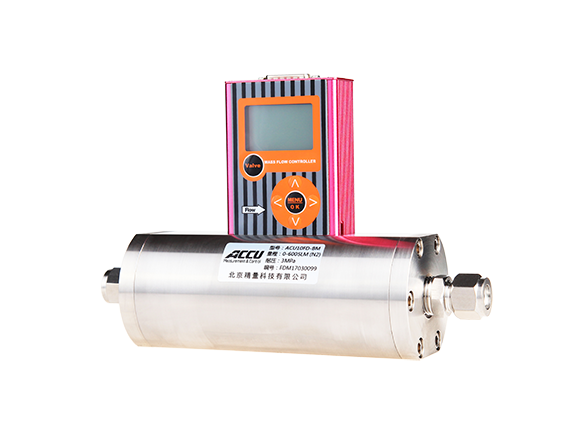
▲ ACU20FD-MC Digital Gas Mass Flow Controller
The precise control of MFCs relies on the highly coordinated operation of measurement sensors, control valves, and flow calculators. As the semiconductor industry advances toward more sophisticated process nodes, the technological barriers for MFCs continue to rise. On one hand, advanced processes demand exceptionally stringent precision in gas‑mixing ratios; even minor fluctuations in flow can lead to uncontrolled etch rates or non‑uniform film thicknesses, potentially resulting in the scrapping of entire wafers. On the other hand, MFCs must also withstand extreme process conditions—such as high vacuum, elevated temperatures, and corrosive gases—which pose significant challenges to the long-term stability of sensors and the sealing life of valves.
Previous page
Previous page:
Related Products

ACU20FD Normally Open Valve Series


Contact Information
Address: Room 1522/23,Building B,Ruichuang International Center,No.8Wangjingdong Road,Chaoyang District,Beijing (R&D Department)


Leave a message
If you are interested in our products, please leave your email address, and we will contact you as soon as possible, thank you!